
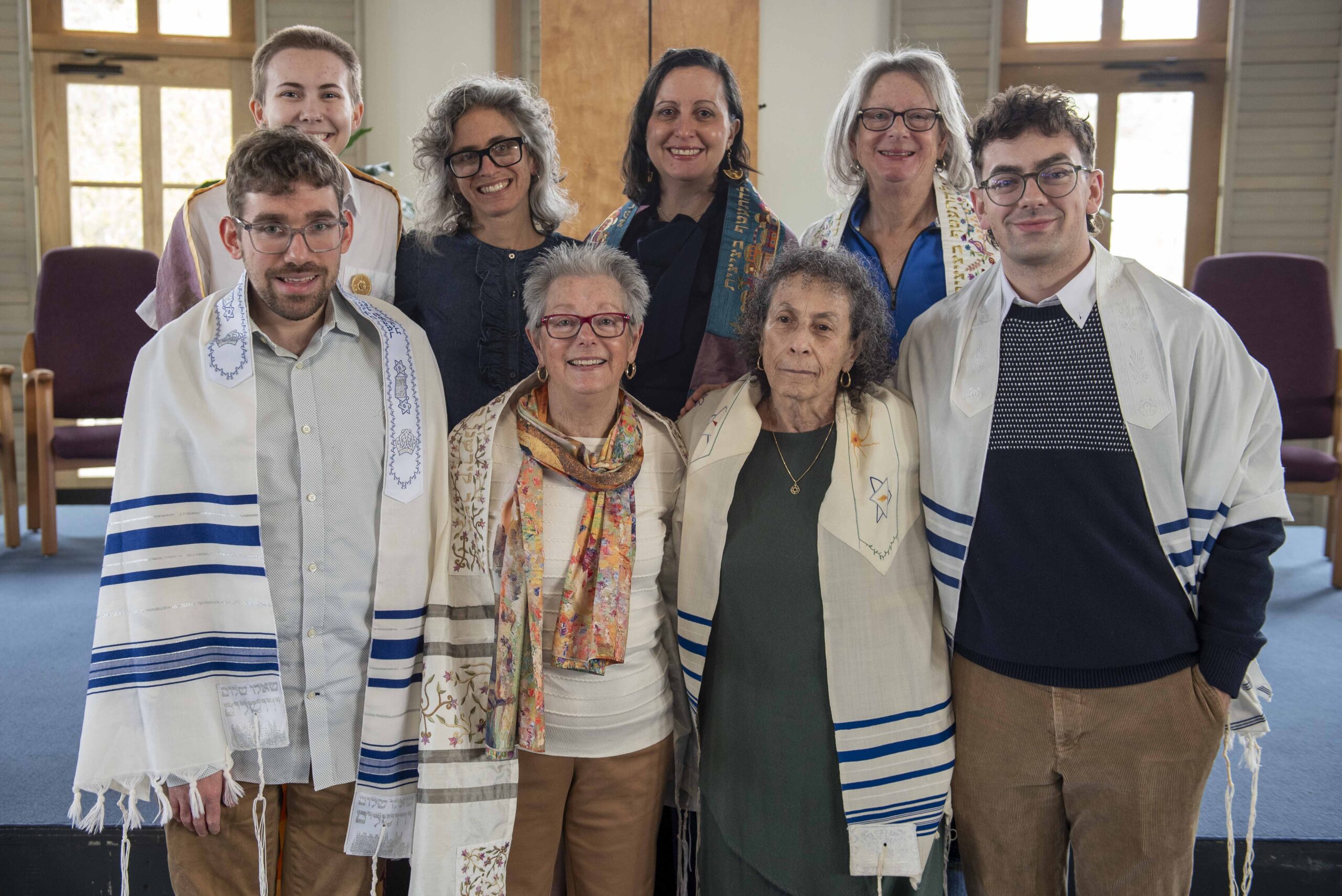
To quote Rabbi Jessica, “HOLY WOW!” The first adult b’nei mitzvah in the 20 year history of our community was truly awesome.
Traditionally Jewish children become bar or bat mitzvah at the age of 12 or 13, marking their recognition in the community as adults, ready to perform the mitzvot (often translated in our wisdom tradition as commandments or, as I prefer, invitations for right and religious behavior). The older I get the less this makes sense to me. 13 year olds can’t drive, they can’t vote, and most don’t choose what religion or congregation they are members of – let alone if they want to stand in front of a room full of people on a Saturday morning and read from an ancient text.
We acknowledge this in the very name of this rite of passage – bar / bat or b’mitzvah – son, daughter, or child of the commandments. As such it makes perfect sense that some people might wait until they are older to make this commitment. I have argued that everyone raised Jewish should have an adult b’mitzvah (what some are now calling a Re-Mitzvah). A moment where we voluntarily choose to enter this process and relationship – with the traditions, with ourselves, and with our communities. I liken it to the Amish Rumspringa when teens are released from communal obligations and must decide on their own if they want to return. What I’m saying is, having an adult b’mitzvah rather than having one at the traditional time might be a blessing, not just some way of playing catch-up.
Each of our celebrants was guided to this moment for a different reason. They each wrote a short essay about this. Here are a few excerpts:
“This journey has given me space to shed my grief and prepare to become a b’nei mitzvah with nothing but gratitude for my late arrival to the bimah. Now I can’t imagine a better time to meet this milestone on my own terms than at age 26 in my Hebrew birth month of Adar, whose energy has always guided my spiritual journey. My Jewishness is joyful and fortuitous and strong.”
“Growing up, I didn’t have much of a religious education in either Judaism or Christianity, despite having parents with backgrounds in both traditions. My Jewish identity was passed along mainly through culture…Then in 2023 a deep sense of dread, anger, and anxiety gripped me in the wake of October 7th and the initial assault on Gaza. Overwhelmed by the ugliness of the world, I felt both the need for spiritual practice and an inescapable sense of obligation to learn about my Jewish roots.”
“It can be easy to feel like an outsider even within your own birthright, and this process has helped me reclaim connection to my very own Jewish identity.”
I’m inspired by the commitment I’ve seen from the group over a year of collective study. We designed a service around their interests – hiddur mitzvah and me’ah brachot (being attentive and creative in how we live our live), Modeh Ani – greeting the day with gratitude, tikkun olam and chesed (performing acts of service and spreading lovingkindness), Jewish meditation, and embracing and harnessing grief. This helped us explore and really understand a key lesson from their Torah portion, Vayakhel-Pekudei – when we work together and share our resources and talents, we can make beautiful things.
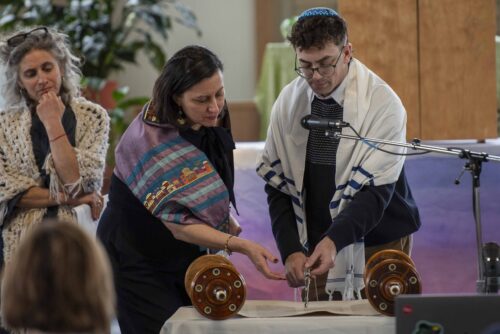
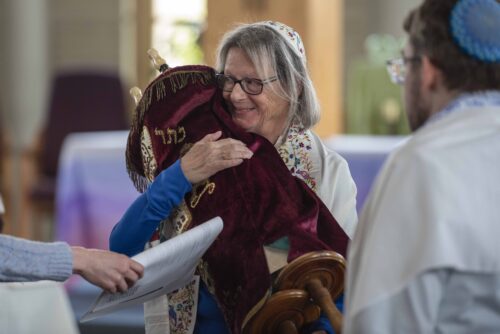
Months ago, only a few participants planned to read Torah during the service. By the end, everyone participated as they felt comfortable. Some chanted directly from the Torah, others read from a paper that includes vowels and trope notations that don’t appear on the scroll, and some just recited the blessing. I’m proud of every one of them.
This is the heart of the hero’s journey Joseph Campbell famously wrote about. While everyone embarked on the journey with some idea of the end goal in mind, it was in the realm of the unknown that our transformation – as a sacred learning cohort, and individuals (myself as leader included) – really happened.
It’s like the distinction between being a tourist and a traveler. On an authentic journey, the destination can’t be predetermined – it needs to leave some room for observation and discovery, planning and spontaneity. There have to be moments where you are tested, where you aren’t sure if you will make it to the end, wherever that might be. Our first adult b’nei mitzvah had all of that and THAT is what makes me so proud. The service WAS beautiful; soul-stirring, thought-provoking, and unfolded with very few technical glitches. But the process of getting there made it that much richer.
In gratitude: I can’t count the number of members who participated in some way in making the day a success – setting up tables and chairs, playing instruments and managing microphones, greeting guests and helping people feel welcome, setting up lunch and washing the dishes… Special shoutout to Jon Groner for taking the photos pictured in this post. From all of us to all of you, THANK YOU!