
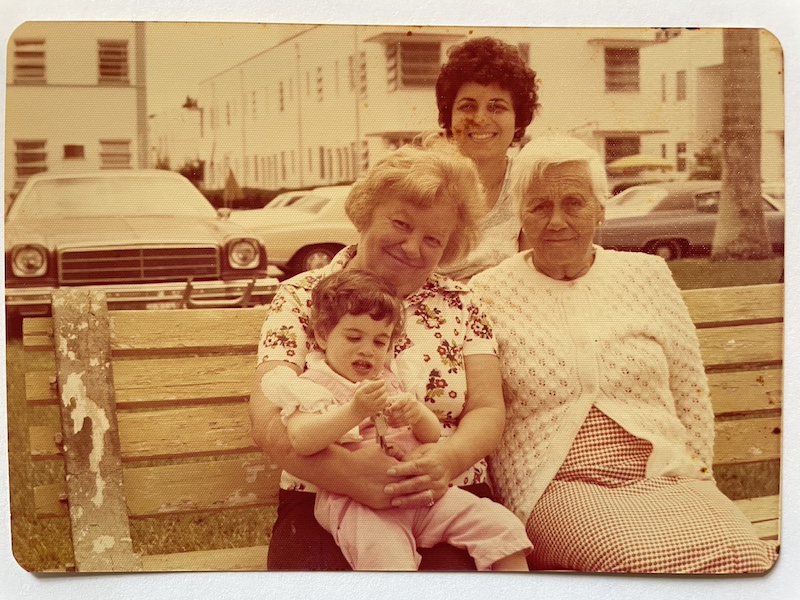
The author in her grandma’s lap, with three generations of matriarchs (Miami Beach, 1976)
Growing up in a Conservative congregation, I wasn’t allowed to attend yizkhor on Yom Kippur. The special memorial service occurs four times each year – Yom Kippur, Shemini Atzeret (at the end of Sukkot), Passover, and Shavuot. My parents adhered to the belief that to participate before your parents were deceased was to draw the evil eye, and none of us wanted that. That was fine by me. The day was long enough and I was happy to venture outside for a while. Until I was nine and my grandma Sylvia died, my parents both joined me.
When I first joined Sukkat Shalom (then the Little Minyan), I always headed home for a break after our morning prayers. But I heard about the way we did yizkhor, organized around storytelling – not just reciting more prayers book ending time standing around silently – and I was intrigued. So one year I took a deep breath and stuck around to check it out. I’m glad I did.
Jessica (not yet Rabbi Jessica at that time) led the group in a few prayers and then people took turns telling stories of loved ones lost according to relation – grandparents, aunts and uncles, parents, siblings, children, and spouses. Those who died of natural causes and those who chose to end their time with us. Those who died in the year gone by and many years ago. As I listened I got to know the people in the room in new ways. We shared a range of emotions – witnessed one another’s tears and even shared a few laughs.
For 20 years we’ve gathered this way. KSS Board Chair Cheryl Lubow has been leading the service for the past few years. In so doing we embody the opening kavanah for yizkhor from our mahzor – a commentary from Rabbi Devora Bartnoff (z”l):
As we gather together for this solemn moment, we are touched by a horizontal connection, a circle of individuals reaching out to each other for comfort and nourishment as we each acknowledge our loss. We are also empowered by a vertical connection with those souls who have cherished the chain of tradition that stretches far back in time. We are all a part of that chain. By honoring it, both in its horizontal form and its vertical dimension, we are proclaiming faith in its continuity. (Kol Haneshamah, p. 1005)
Jews are not the only people who tap into this chain of remembering at this time of year. Many of us are familiar with Mexico’s Día de los Muertos. That tradition centers around colorful displays of, and dedicated to, generations past and joyous gatherings. I long to bring that energy into Jewish tradition. Pagans also set out altars to the ancestors at this time of year in celebration of the Gaelic festival of Samhain. They tie the tradition to the decreasing sunlight hours, a time of transition from the season of bright light and growth to the season of darkness and rest. As with all liminal spaces, boundaries blur at this time of year – in our lived experience and our memories.
The High Holy Days of Awe are a season of deep time. We recite prayers our people have recited for generations, across the world, in many languages. And so it is for those who feel called to Jewish community at this time of year. We hear the voices of our ancestors, inviting (sometimes chiding, sometimes begging) us to carry on the traditions, to keep the chain intact. But increasingly, we are asking what’s in it for us. Is it enough to go to synagogue for Rosh haShanah and Yom Kippur just because it’s what our forefathers and mothers did? In this moment of unraveling in the United States and in the Jewish community, what does it mean to participate in Jewish community? What will we carry forward and what must we let go?
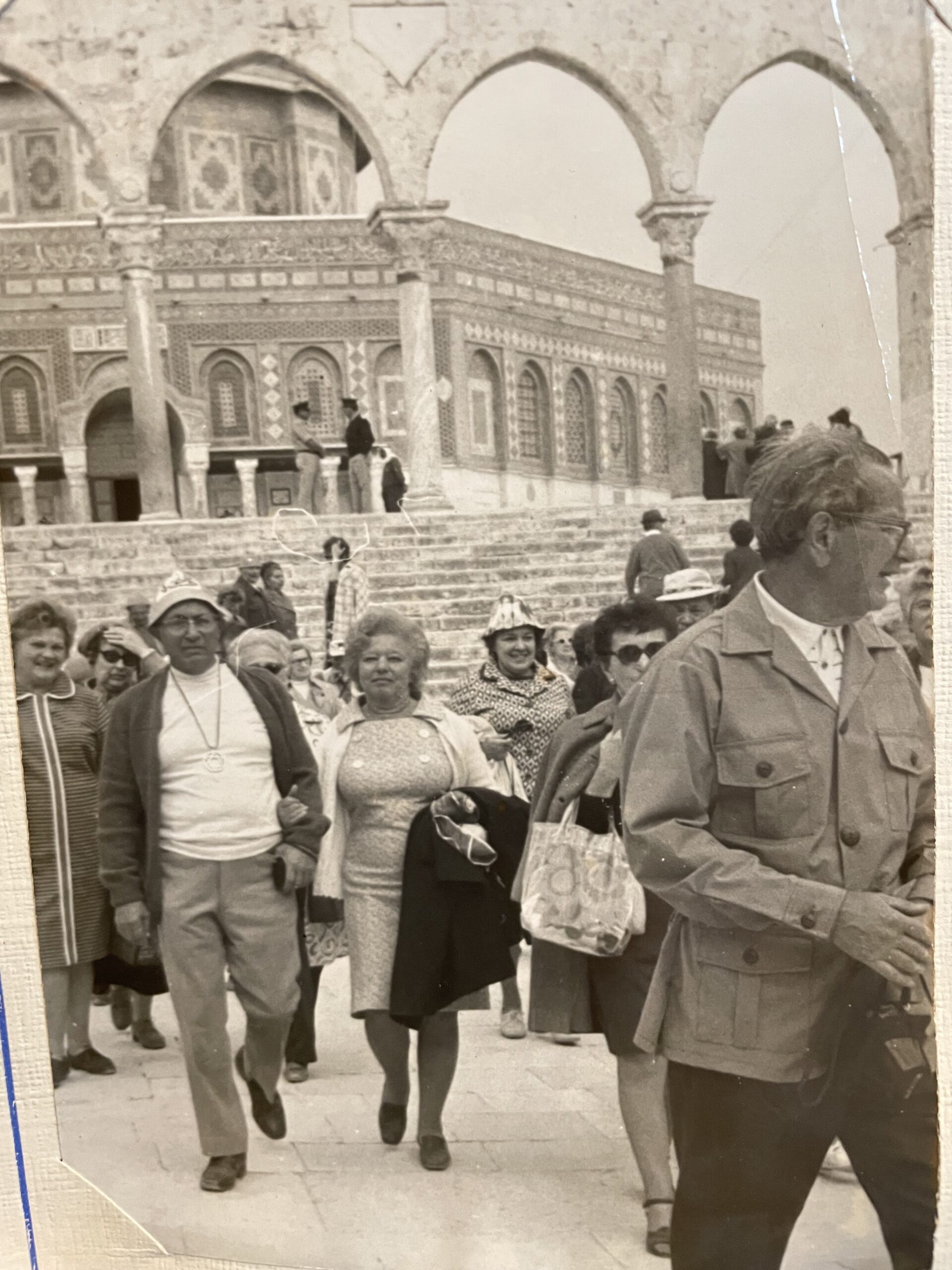
Since October 7, 2023 many of us have had conversations with our ancestors and the generations yet to be. I’ve spent time with my Grandpa Sam who believed his family was expelled from Spain during the Inquisition. In their memory, he longed for a homeland to return to. And I’ve thought about my Grandma Sylvia who left Poland as a child and lost many relatives in the Holocaust. She believed we needed a place to run to. I’ve also dreamt of those yet to be born who will ask what I did while the IDF was starving innocent people in Gaza and destroying ancient olive groves in the West Bank, all in the name of freeing the hostages whose names I don’t know.
This year, perhaps more than ever, we feel caught up in this liminal space, wrestling with our identities across the generations. And as Rabbi Alan Lew taught, we are completely unprepared. How could we be?
What we can do is meet the moment head on, declaring heineini, here I am. We can acknowledge where we missed the mark, recharge our batteries, and go forth to do our best to work for justice, peace, and prosperity in the names of those we are connected to, by blood and air, across time and space.
G’mar Chatimah Tovah – May your sealing in The Book of Life be for good…