
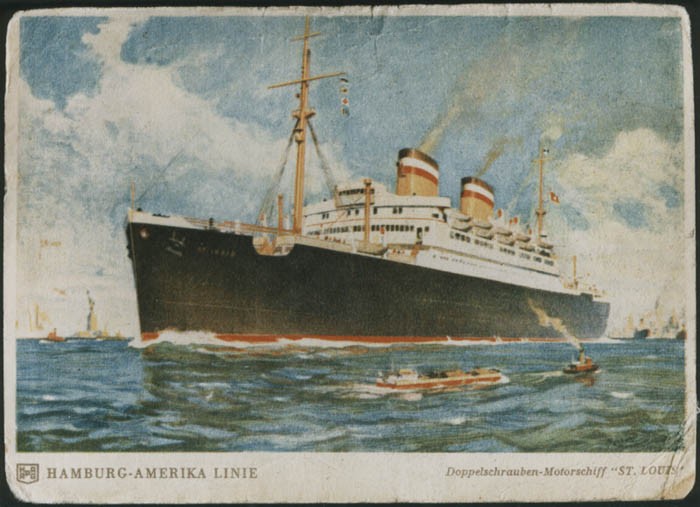
The first week of July, a series of ships floated through our Sukkat Shalom. Aboard were lessons from the past and messages for a sustainable future.
The first was the MS St. Louis which set sail from Hamburg, Germany to Havana, Cuba on May 13, 1939 with over 900 passengers, most Jewish, fleeing Nazi persecution. The ship reached its destination May 27, but most of the passengers were denied entry. As with anti-immigration policies today, many factors contributed to the Cuban government’s refusal to provide safe harbor for these refugees. Economic depression. Xenophobia. Misplaced and exaggerated fears for health and safety. Petitions and pleas sent to the U.S. government were also denied and the ship began its return to Europe on June 6. A third of the passengers who made the journey back across the Atlantic were admitted to Great Britain while the rest returned to the mainland. Many found safe shelter, but 254 were ultimately killed.
The MS St. Louis played a major role in the young adult novel Refugee by Alan Grantz (2017). When my daughter read the book a few years ago, she told me I had to read it too. She was right and I’m using this moment to pass the recommendation on to you. Grantz weaves together the captivating stories of three children fleeing their homes in different times and places.
“Josef is a Jewish boy living in 1930s Nazi Germany. With the threat of concentration camps looming, he and his family board a ship bound for the other side of the world…Isabel is a Cuban girl in 1994. With riots and unrest plaguing her country, she and her family set out on a raft, hoping to find safety in America…Mahmoud is a Syrian boy in 2015. With his homeland torn apart by violence and destruction, he and his family begin a long trek toward Europe…”
I was reminded of these children as KSS joined other synagogues and social service agencies across central Ohio to plan and host a vigil commemorating the respective dates on which the MS St. Louis (Josef’s ship) was turned away from US shores (June 6,1939) and the Alien Enemies Act was signed into law (July 6, 1798). As in Refugee, the event featured the stories of immigrants who risked everything to come to the U.S. for a better life.
Guided by HIAS, we recalled these events as reminders that: “The United States has experienced historical lows in which we have abandoned core values and succumbed to xenophobic fervor.” We are living through another such moment. Even worse, some of the actions being taken today are being done in the name of protecting Jews and fighting antisemitism through an initiative known as Project Esther. While we want all Jews everywhere to feel safe, we know two wrongs don’t make a right. And we know that lands with laws designed to harm any minority are less safe for Jews.
How we act now will be our legacy. This was also the message brought to us by Rabbi Yonatan Neril, founding director of the , during a talk co-hosted by the Shalom Alliance and Interfaith Association of Central Ohio. R’ Neril made nine cases for spiritually-grounded climate action using ship metaphors. Each related to a biblical story or teaching. I’ll share one here. You can read more in his two-volume Eco Bible.
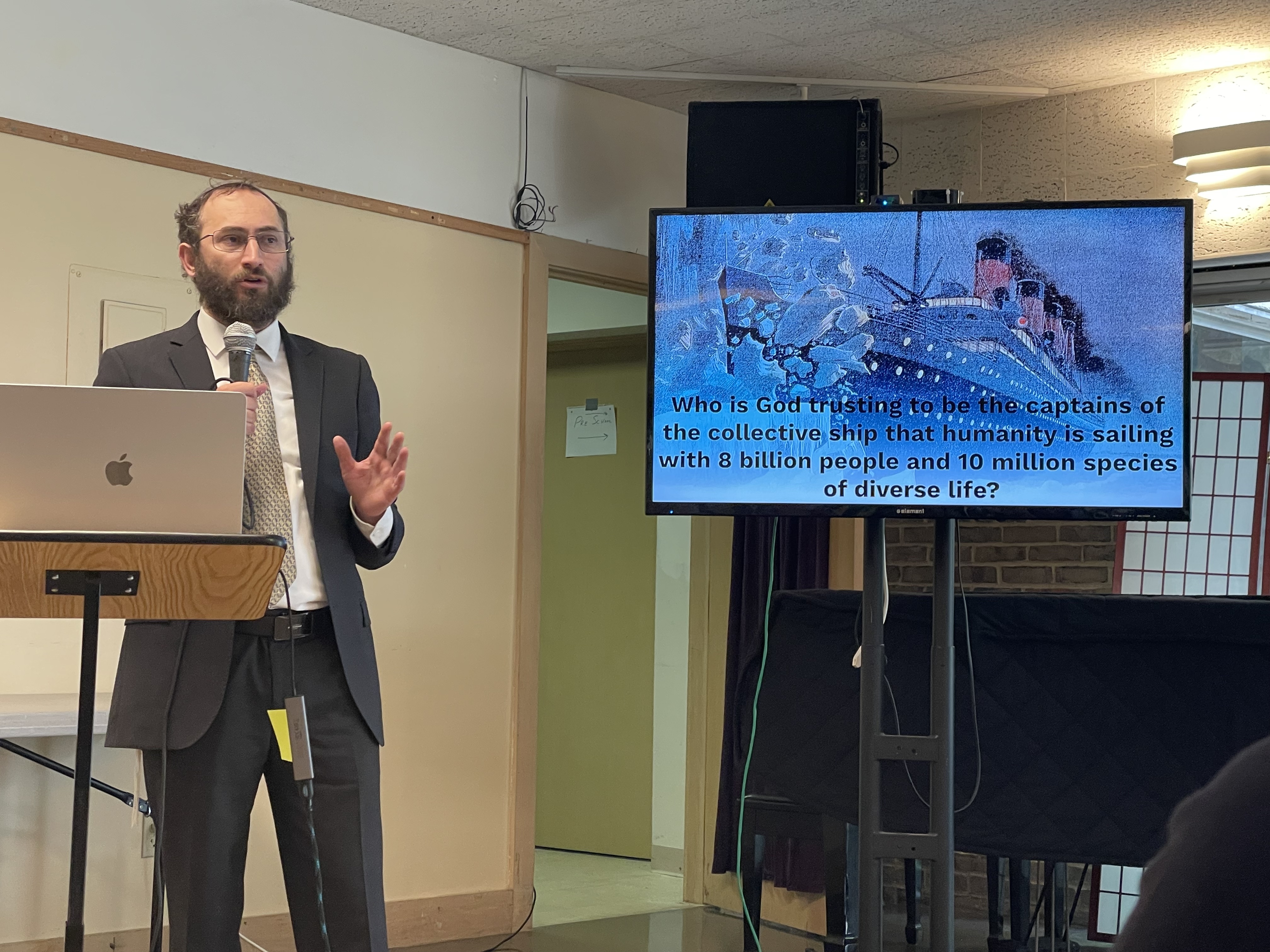
Rabbi Shimon bar Yochai told the story of passengers on a boat. As they left the dock, one passenger began to drill a hole under his seat. His fellow passengers protested. “What concern is it of yours?” he responded. “I am making a hole under my seat, not yours.” They replied: “That is so, but when the water comes in, it will sink the whole boat and we will all drown.”
The moral of the story seems obvious as does its connection to Earth as the home of all living things. Just as with immigration, if we fail to see that our fates are tied up with those living in the path of wildfires and floods, those breathing polluted air and drinking contaminated water defiled by the products we consume, we are complicit in drilling a hole in the ship. If we criticize the oil industry but don’t do what we can to reduce our own consumption, we are complicit. If we complain about garbage in our waterways, but don’t work for an end to the flow of single-use plastic, what are we leaving behind?
Can we achieve 100% carbon neutrality while living in contemporary society? Probably not. But can we try to live simply and with intention so others may simply live, as Mahatma Gandhi suggested? Judaism offers us many lessons for doing so. Our holidays and prayers offer reminders that our connection to the natural world is a pathway to divinity.
So may we work every day, in small and large ways, as individuals and collectively, to steer our ships to safe harbor. And for policies that support wide open doors for those fleeing from harm and which support healthy living systems, for all species on Earth.